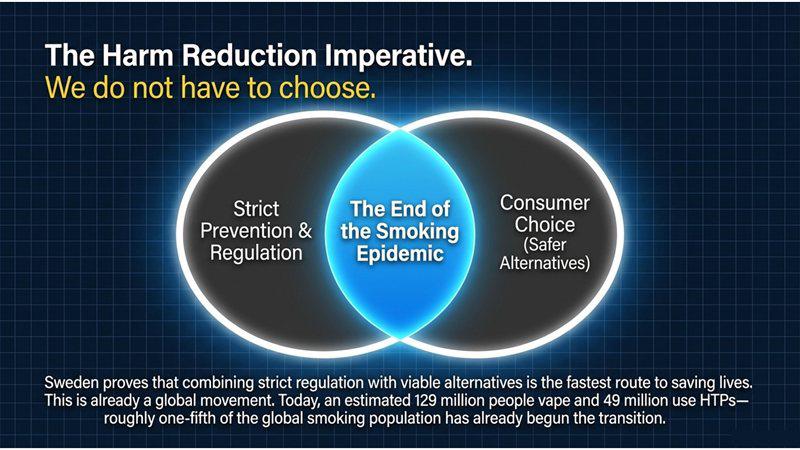



Swedish males show lung cancer incidence below HALF the EU mean — harm reduction explains the gap.
Tobacco harm reduction finds its strongest national proof in Sweden, where measurable population health gains set a global benchmark. Lung cancer remains devastating across most of Europe, yet Swedish men experience strikingly low rates. Evidence ties this outcome to Sweden’s distinctive, multi-decade strategy built around snus.
The Stark Lung Cancer Gap#
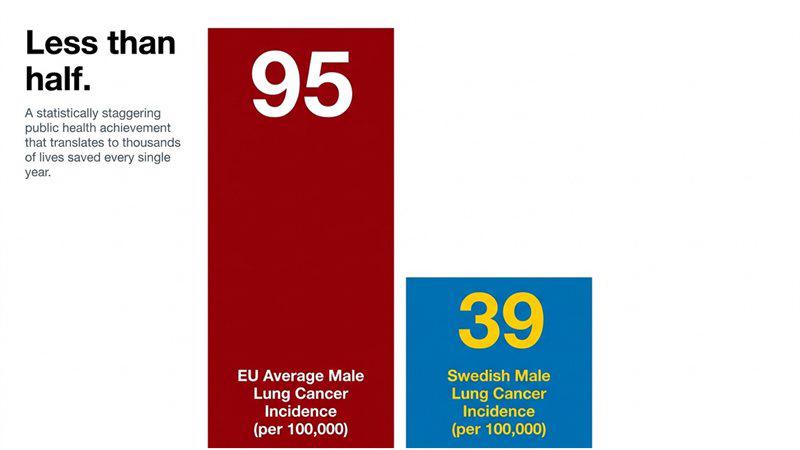
The figures speak plainly: Swedish male lung cancer incidence sits at 39 per 100,000 versus the EU average of 95 per 100,000 — under half the continental rate. This public health milestone translates to thousands of lives preserved annually.
Sweden’s Dramatic Smoking Drop#
Chance played no role. Sustained effort over decades produced the result:
- Early 1980s: over 30% of Swedes smoked daily
- 2003: daily smoking fell to 16% [GSTHR 2026]
- Present: under 5% of Swedish adults smoke daily (4.8% per the 2025 report) — while over 20% of EU adults still smoke daily
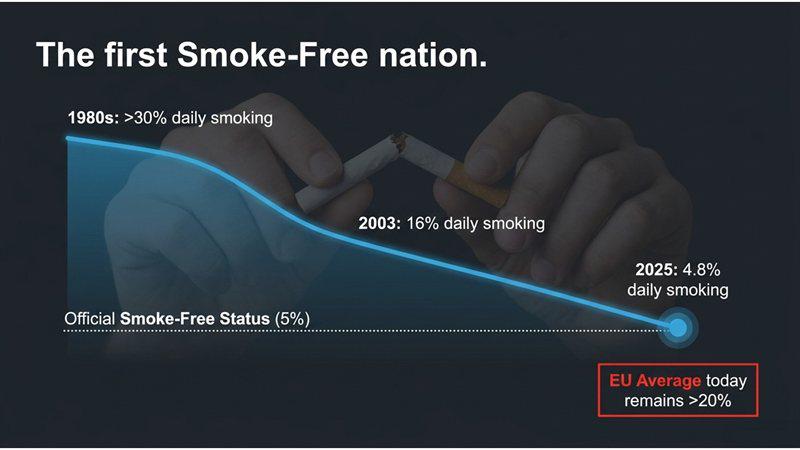
The Local.se notes: “For the first time in CAN’s surveys, fewer than five percent smoke regularly in Sweden… the political goal for Sweden to be smoke-free by 2025 has been achieved.” Daily smoking prevalence plunged from 16% to 4.8% between 2003 and 2025.
Snus: The Harm Reduction Linchpin#
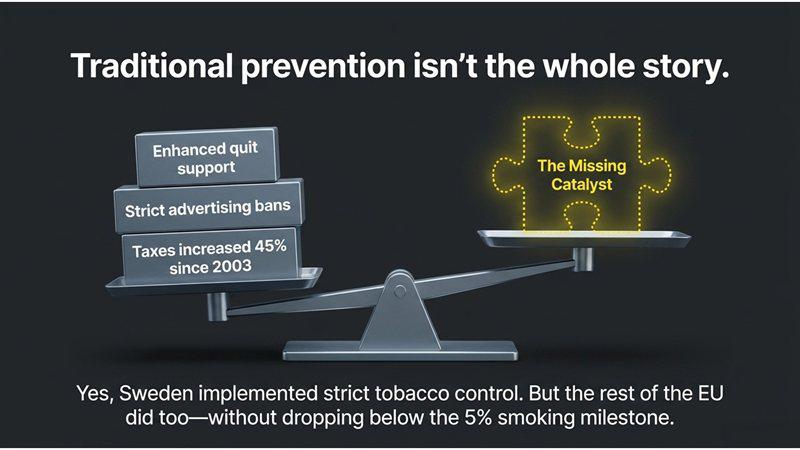
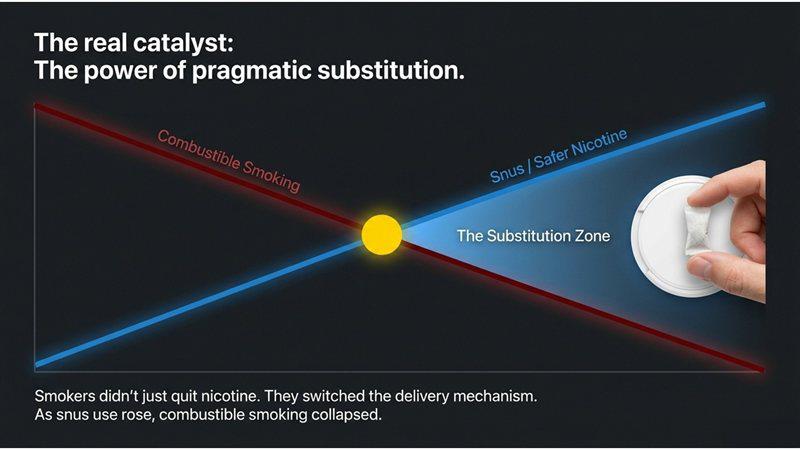
Preventive policy drove early declines, but Sweden’s model uniquely pairs those measures with ongoing snus access — the moist oral tobacco powder with centuries of Swedish tradition.
Sweden endures as the population-level THR benchmark because it unites long-term, high snus adoption with minimal daily smoking.
Measuring the Gain: Lives Preserved#
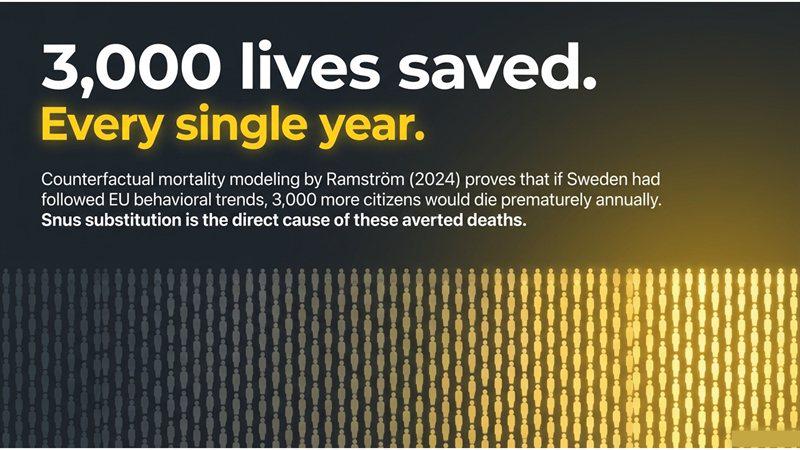
The benefit moves beyond theory into counted lives. Ramström (2024) quantified the mortality advantage from snus displacing cigarettes in Sweden.
Contrasting observed Swedish mortality against EU counterfactual prevalence, the study estimates roughly 3,000 lives saved each year in Sweden thanks to snus substituting for cigarettes.
The Latency Effect#
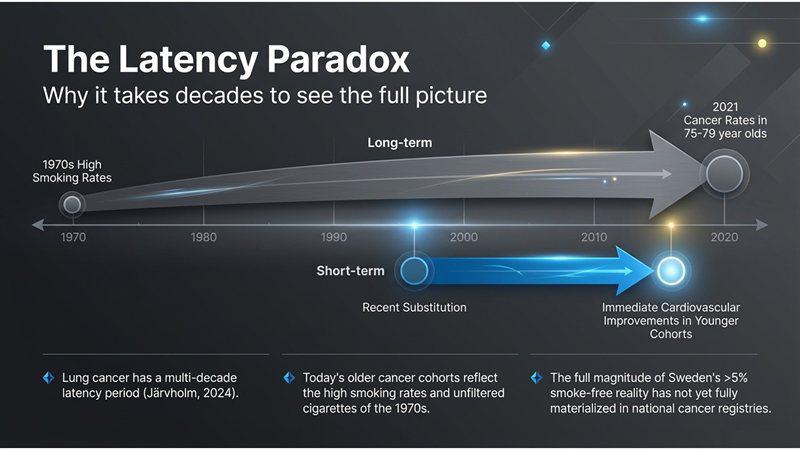
A key nuance clarifies why full cancer benefits don’t appear instantly across all age bands: the latency effect.
Even as per-capita cigarette consumption dropped from roughly 1,800 to 600 yearly, lung cancer rates among men aged 75–79 in 2021 matched 1970 levels.
Lung cancer emerges slowly across decades of exposure. The historic shift to filtered cigarettes plus the long latency window mean today’s rates in older groups still mirror smoking patterns from years past.
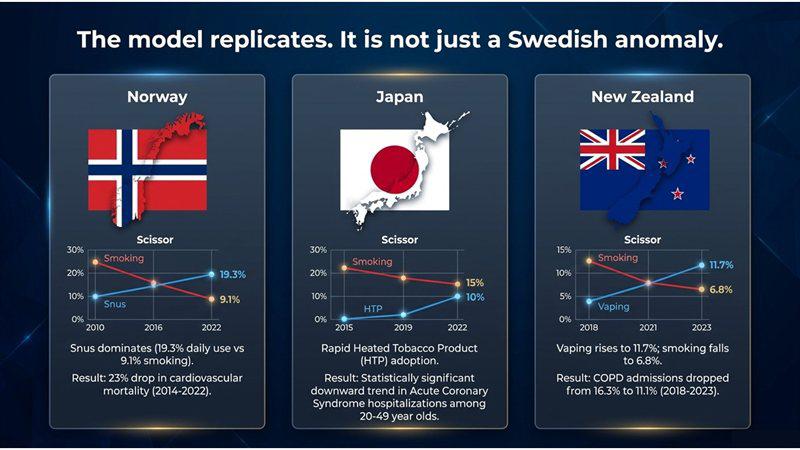
Yet encouraging signals surface elsewhere. Japan shows a statistically significant decline in acute coronary hospitalisations among adults 20–49, steepest where heated tobacco uptake ran higher. Parallel trends emerge in Sweden for cardiovascular and respiratory conditions that respond faster to reduced smoke exposure. However, evidence is still indirect and cannot establish causality.
As younger cohorts with less smoking exposure enter higher-risk ages, the full impact begins appearing across more health measures.
Long-Term THR Works#
Sweden proves tobacco harm reduction, applied thoughtfully and consistently over decades, yields measurable population health gains.
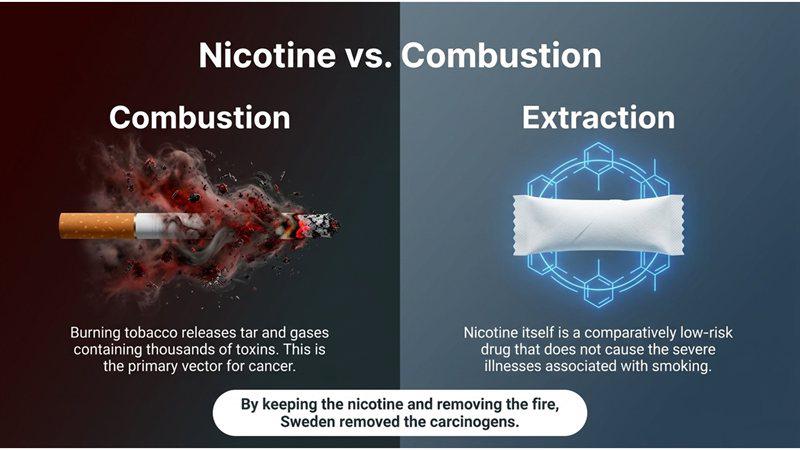
The Swedish model shows: strong preventive measures (tax hikes, ad bans, cessation support) cut smoking initiation and boost quitting; continued access to less harmful alternatives like snus gives smokers unwilling or unable to quit nicotine entirely a viable path; a pragmatic stance recognizing nicotine isn’t the core problem — smoke is — produces tangible public health results over time.
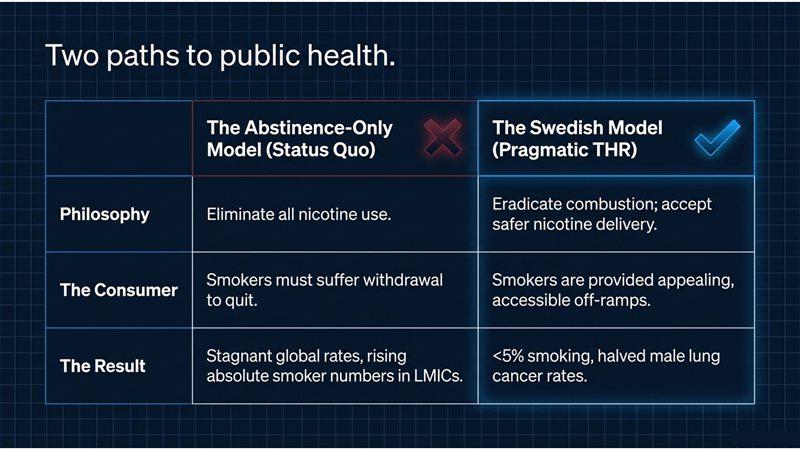
Nations aiming to curb smoking-related disease can draw a clear lesson from Sweden’s long-term experiment: when smokers access satisfying, less harmful alternatives regulated sensibly rather than banned, significant public health improvements follow across generations.
Sources: Global State of Tobacco Harm Reduction 2026 Report | GSTHR.ORG; The Local.se: “Incredible milestone reached as Sweden becomes a smoke-free country” (May 25, 2026)