
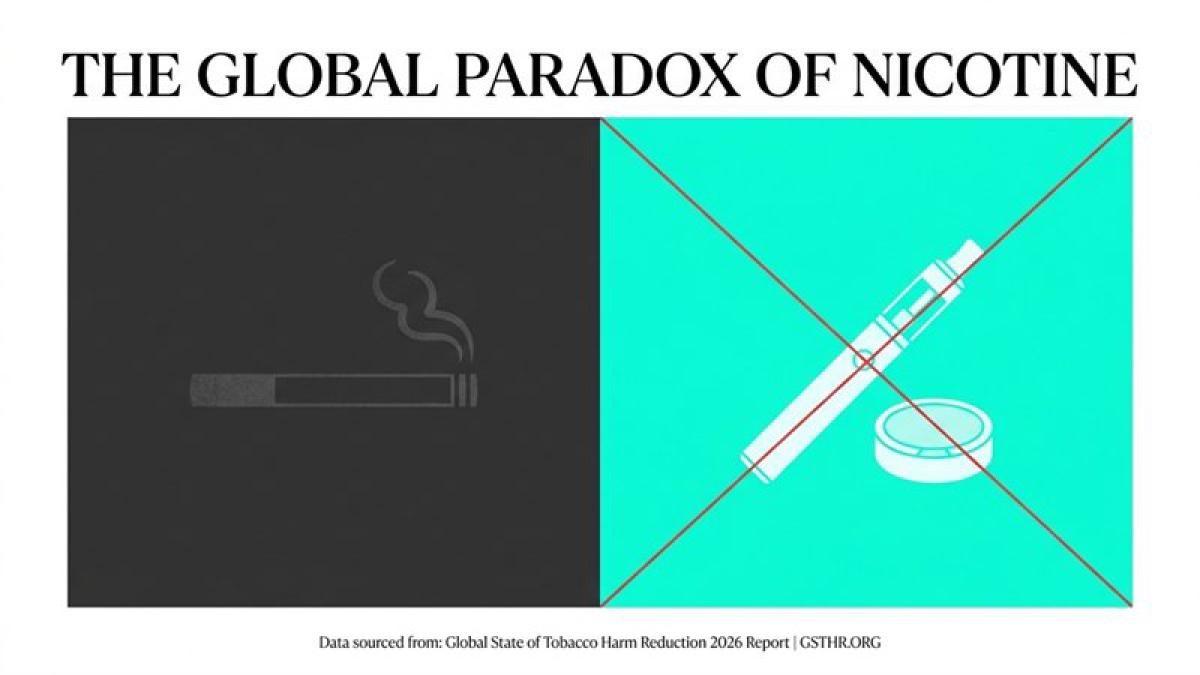

Why Cigarettes Are Everywhere But Non-Combustible Nicotine Alternatives Are Banned? Here’s something that should make you stop and think: In 2026, you can walk into almost any store worldwide and buy a pack of cigarettes - a product that kills up to half of its long-term users. But try to buy a vape or nicotine pouch to help quit smoking, and you might be breaking the law.
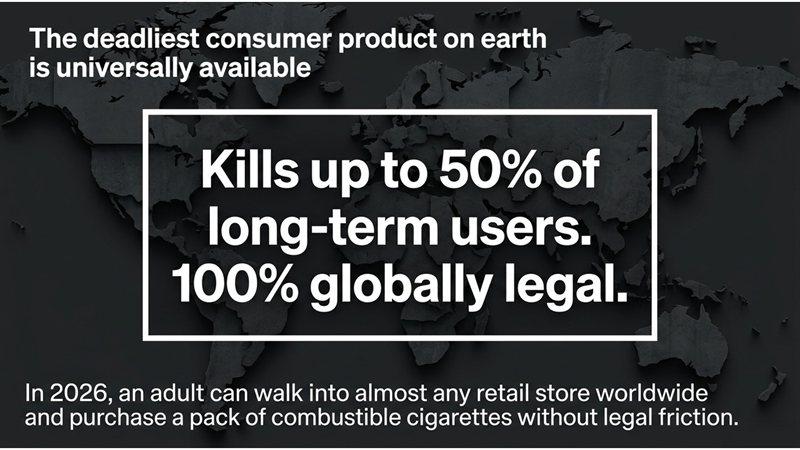
This is a global pattern that defies logic and costs lives.
Let’s look at the numbers that reveal this shocking paradox:
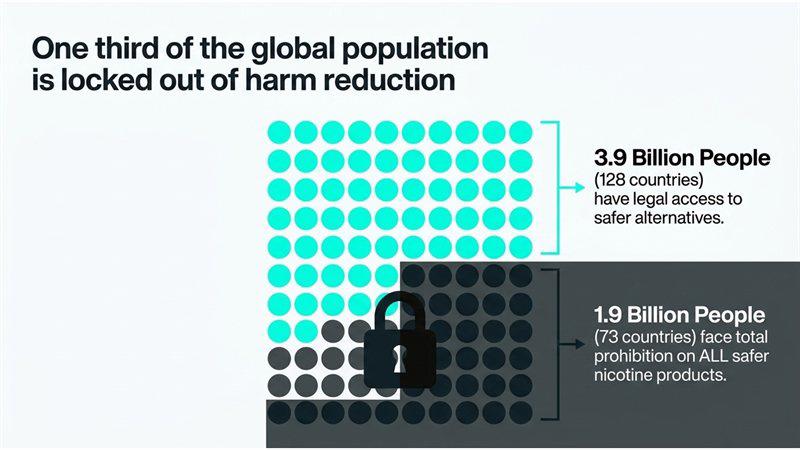
First, the legal availability of safer alternatives:
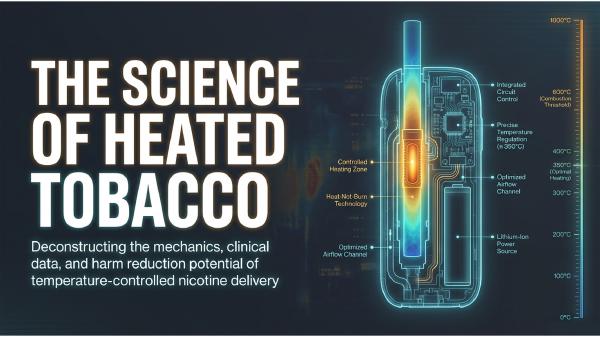
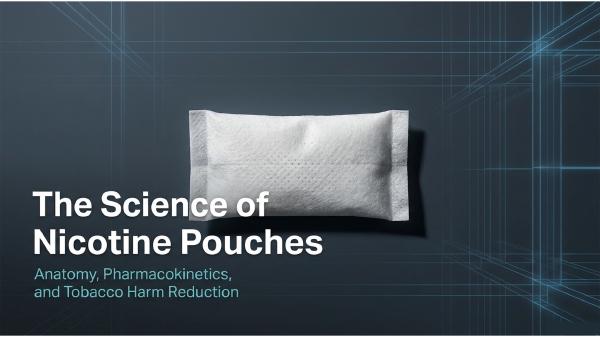
Safer nicotine products like vapes, heated tobacco, snus, and nicotine pouches are legally available in 128 countries
That covers 3.9 billion people - about 67% of the global population
Now, where these products are completely banned:
73 countries maintain total prohibitions on ALL safer nicotine products
That’s 1.9 billion people - approximately 33% of the world’s population
In these places, if you smoke, you have no legal access to less harmful alternatives
And here’s the mind-bending part: Combustible cigarettes remain legally available EVERYWHERE - even in those 73 countries that ban all safer alternatives.
Consider these real-world cases:
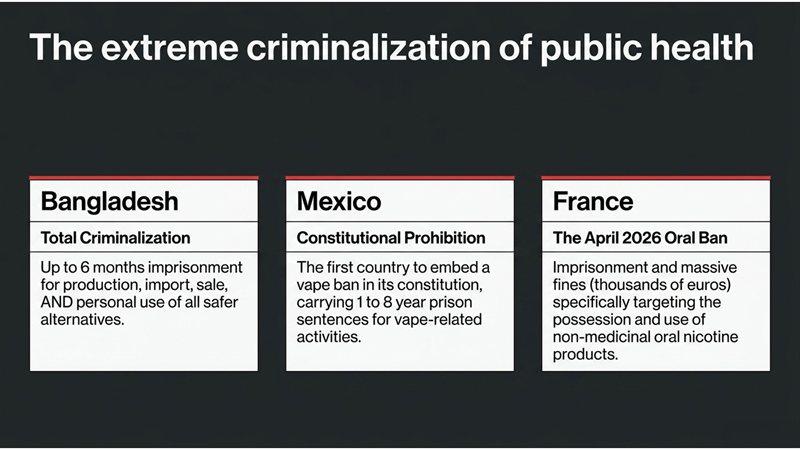
Bangladesh criminalized production, import, sale, AND personal use of ALL safer nicotine products - with up to 6 months imprisonment.
Mexico became the first country to embed a vape ban in its constitution, with 1-8 year prison sentences for vape-related activities.
France implemented a ban on non-medicinal oral nicotine products in April 2026, threatening with imprisonment and thousands of euros fines for possession and use of these products.
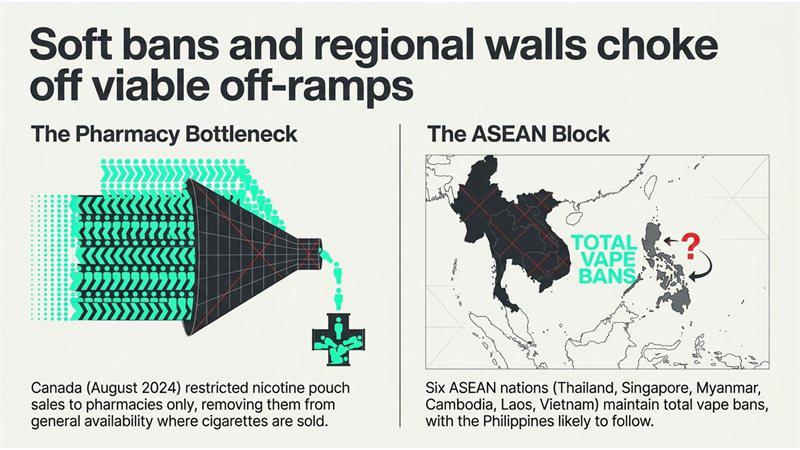
Canada restricted nicotine pouch sales to pharmacies-only since August 2024, effectively removing them from general availability.
Across six ASEAN nations (Thailand, Singapore, Myanmar, Cambodia, Laos, Vietnam) vapes are banned, with the Philippines likely to follow.
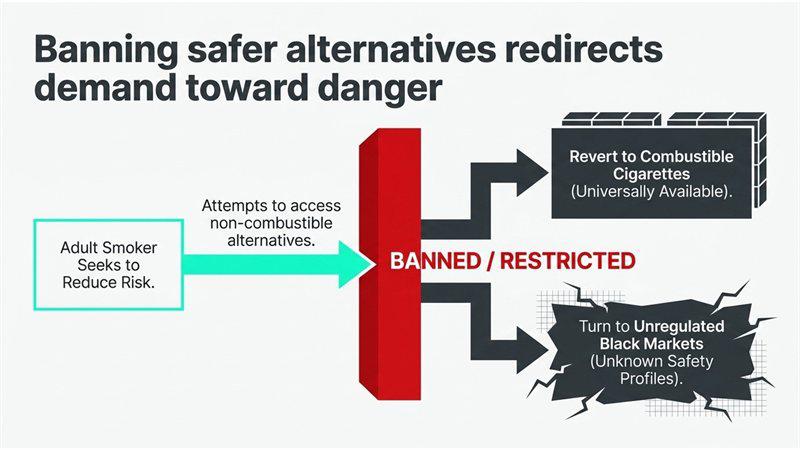
Why does this matter? Because when safer alternatives are banned or heavily restricted, smokers who want to reduce their risk have only two options: continue smoking deadly cigarettes or turn to unregulated black markets.
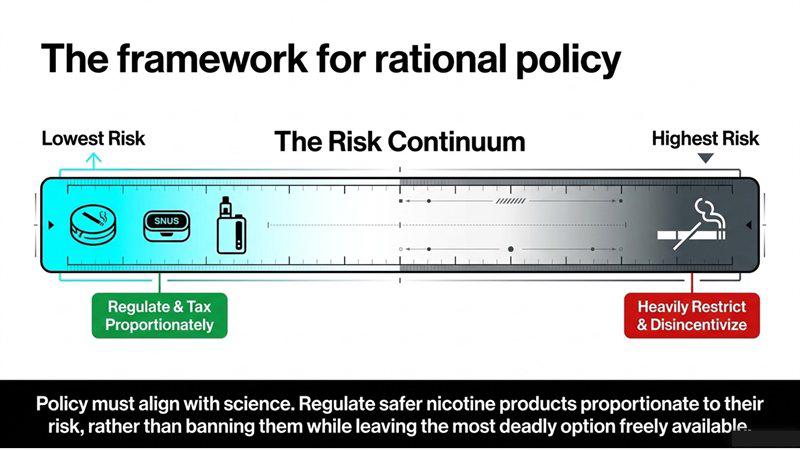
This asymmetry continues to define the central paradox in global tobacco control policy: the most harmful product is universally legal, less harmful alternatives are not.
This isn’t just theoretical. When countries ban vapes while keeping cigarettes available:
Adult smokers lose access to effective quitting tools
Some revert to smoking exclusively
Others seek unregulated products with unknown safety profiles
Public health opportunities to reduce smoking-related disease are missed
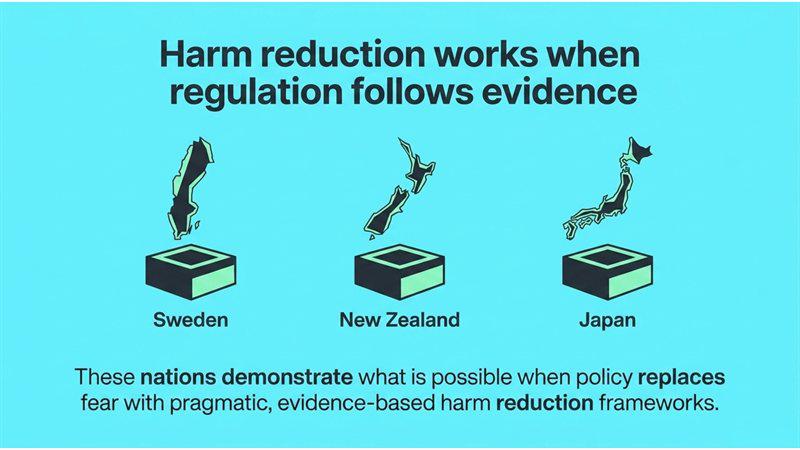
The good news? Change IS happening. Countries like Sweden, New Zealand, and Japan show us what’s possible when regulation follows evidence rather than fear.
Swedish men, for instance, have lung cancer rates less than HALF the EU average - largely due to decades of snus use as a cigarette alternative.
The solution isn’t complicated: regulate safer nicotine products proportionate to their risk.
Smokers deserve access to less harmful alternatives.
Sources: Global State of Tobacco Harm Reduction 2026 Report | GSTHR.ORG