

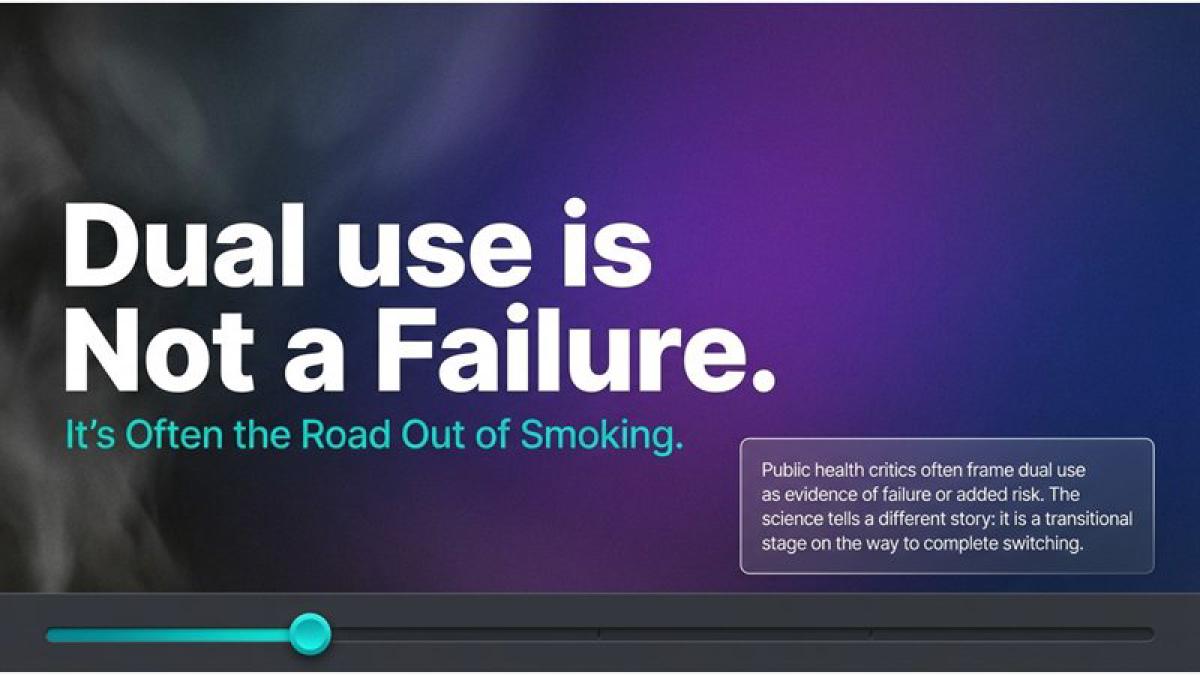

This pattern often marks the path out of smoking. If you smoke some days and vape on others—or vape while still having the occasional cigarette—you’ve probably heard this proves vaping fails. Worse, some claim dual use is more dangerous than smoking alone. Critics present it as evidence of failure or added risk. The science tells a different story: for many, dual use is a transitional stage toward complete switching.
What the Evidence Shows#
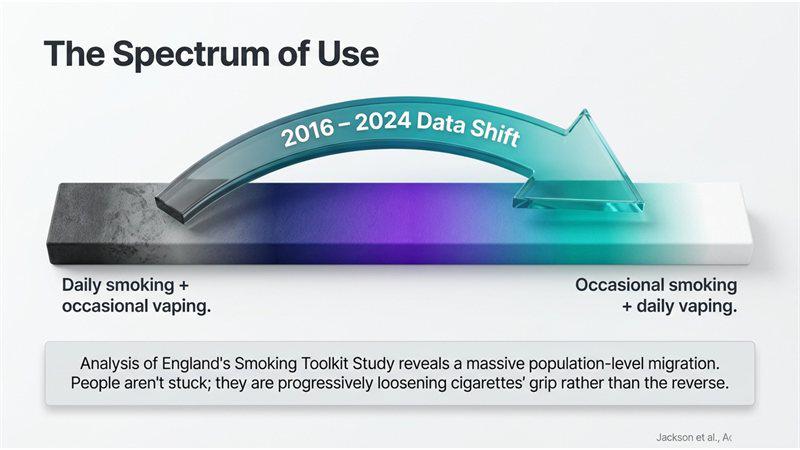
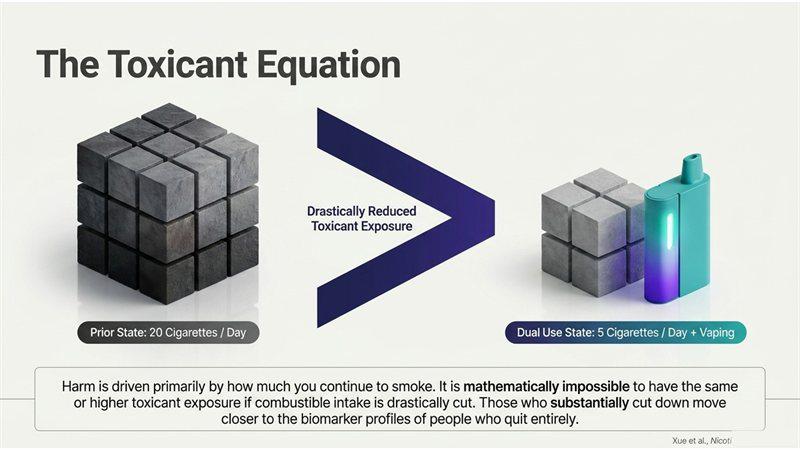
England’s Smoking Toolkit Study (Jackson et al., 2025) reveals a meaningful shift between 2016 and 2024: dual-use patterns moved from “daily smoking with occasional vaping” toward “occasional smoking with daily vaping.” That direction matters—it reflects people progressively loosening cigarettes’ grip, not the reverse. Toxicant research (Xue et al., 2025) confirms harm among dual users tracks mainly with how much they keep smoking: those who substantially cut cigarettes move toward biomarker profiles of people who quit entirely.
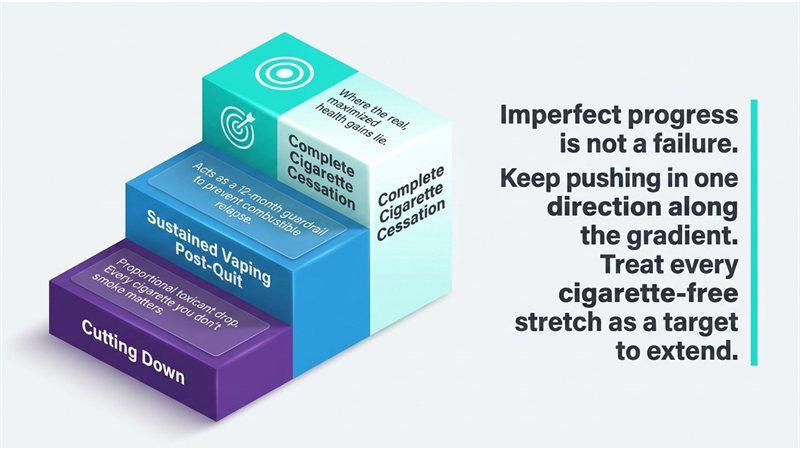
This makes sense. If you smoked 20 cigarettes daily before starting vaping, and now use 5 cigarettes daily plus vapes, you cannot be exposed to the same or higher toxicant levels; exposure is definitely lower.
Still, even a few daily cigarettes produce far higher toxicant exposure than quitting completely (even by vaping daily); therefore, complete cigarette cessation remains the goal for every smoker.
Vaping After Quitting Helps Prevent Relapse#
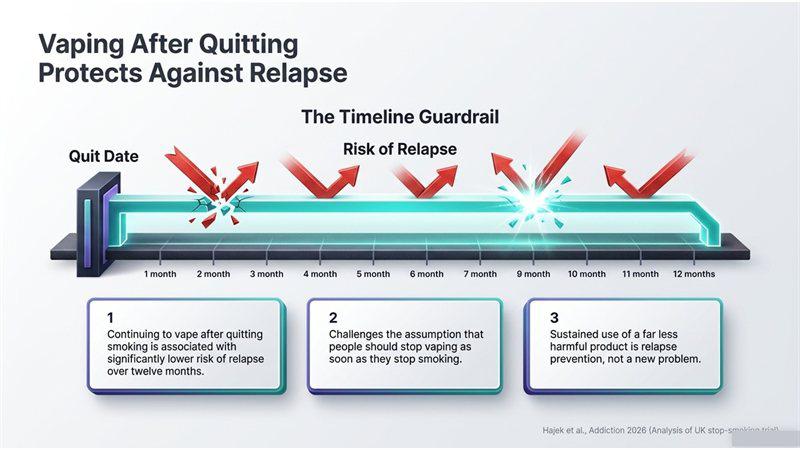
The most practically important finding comes from Hajek and colleagues (2026), analyzing a large UK stop-smoking trial: continuing to vape after quitting smoking was linked to significantly lower relapse risk over twelve months. This challenges the assumption that people should stop vaping as soon as they stop smoking. Sustained use of a far less harmful product is better understood as relapse prevention, not a new problem.
What This Means for You#
If you currently use both products, the goal is clear: keep pushing in one direction. Every cigarette you don’t smoke matters more than anything else about your use pattern. Complete switching yields dramatic toxicant reductions; cutting down helps proportionally; and continued vaping after your last cigarette appears to help you stay cigarette-free. Don’t let anyone tell you imperfect progress isn’t progress—but equally, complete switching is where real health gains lie, so treat every cigarette-free stretch as a target to extend.
Sources: Jackson et al., Addiction 2025 | Xue et al., Nicotine Tob Res 2025 | Hajek et al., Addiction 2026