


The electronic cigarette represents one of the most significant technological innovations of the last 20 years in the field of tobacco control. For a smoker being unable to quit by currently-approved methods and seeking a less harmful alternative, understanding the concept of vaping is the first step toward transitioning to a smoke-free lifestyle. Here are 5 key points you should know.
1. The Historical Search for a Solution: From Hon Lik to the Global Market#
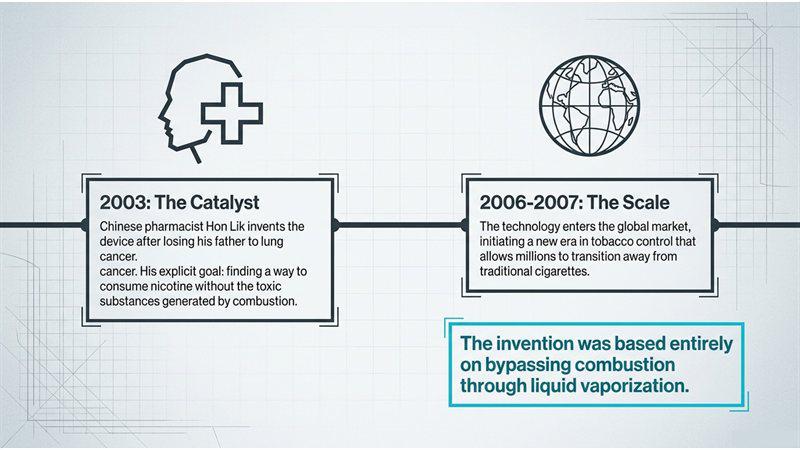
The modern history of the electronic cigarette began in 2003, when Chinese pharmacist Hon Lik, who lost his father to lung cancer, sought a way to consume nicotine without the toxic substances of combustion. His invention was based on the vaporization of liquid through heating. The product was released to the global market around 2006-2007, marking the start of the electronic cigarette era that allowed millions of smokers to abandon traditional cigarettes.
2. The Mechanics of Vaping: How it Works#
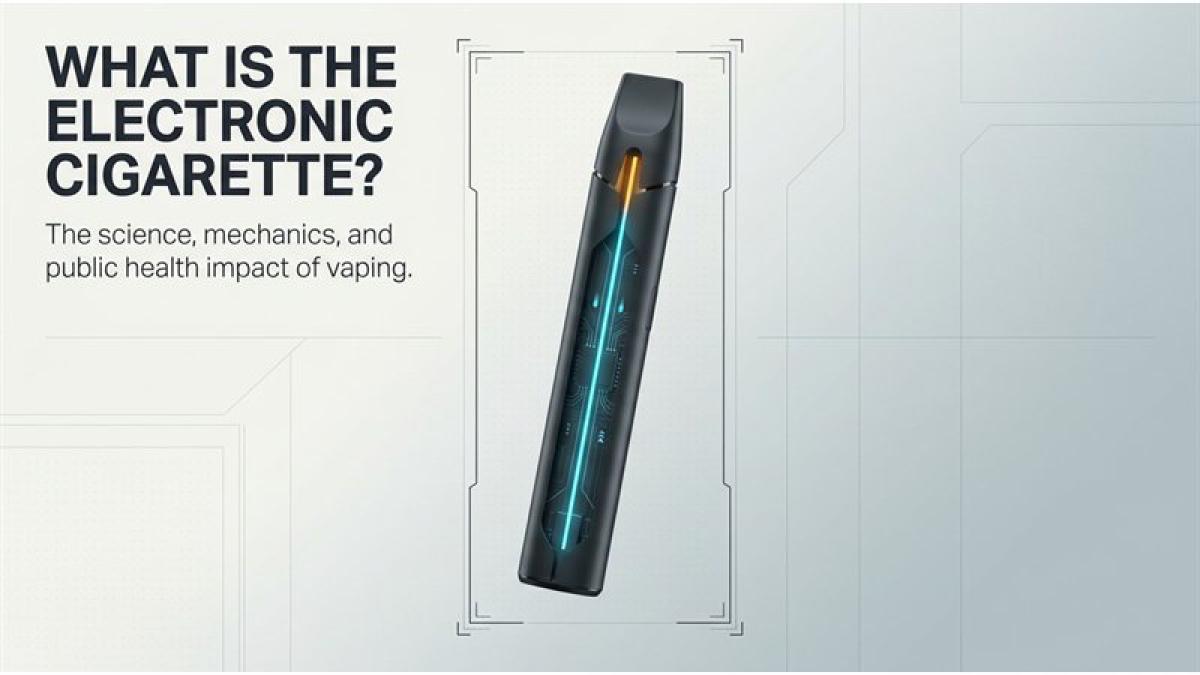
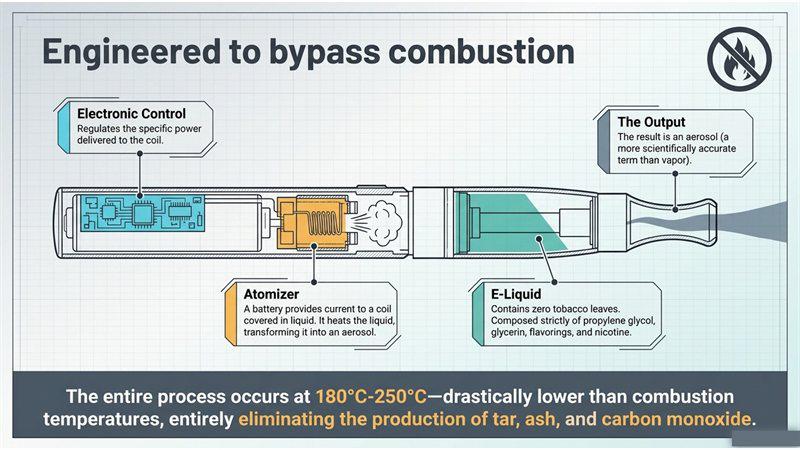
The basic principle of the electronic cigarette is the complete bypassing of combustion. The device does not contain tobacco leaves, but rather a refill liquid (e-liquid) consisting of propylene glycol, glycerin, flavorings, and nicotine.
Electronic Control: Regulates the power delivered to the coil.
Atomizer: The battery provides current to a coil covered in liquid. The liquid heats up, turning it into an aerosol (a more accurate term than “vapor”).
The Result: The process occurs at temperatures much lower than those of combustion (180°C-250°C), eliminating the production of tar, ash, and carbon monoxide.
3. Scientific and Clinical Data#
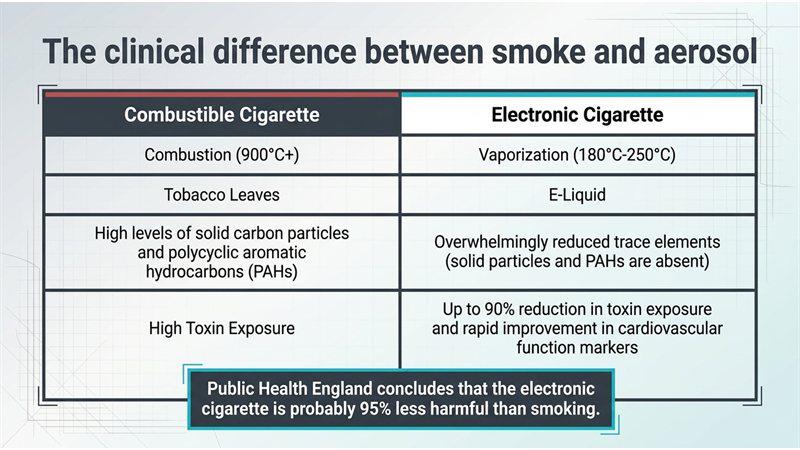
The chemical difference between cigarette smoke and vapor is vast. A wealth of research leads us to the conclusion that the electronic cigarette is probably 95% less harmful than smoking (a conclusion published by Public Health England).
Reduced Toxicity: Emissions of toxic substances are overwhelmingly lower, as solid carbon particles and polycyclic aromatic hydrocarbons (PAHs) are absent.
Biomarkers: Clinical studies show that smokers who switched to vaping exhibit rapid improvement in cardiovascular function markers and a reduction in toxin exposure of up to 90%.
4. Nicotine Absorption and Satisfaction#
One of the main advantages of the electronic cigarette is its ability to satisfy a smoker’s need for nicotine in a manner similar to a cigarette.
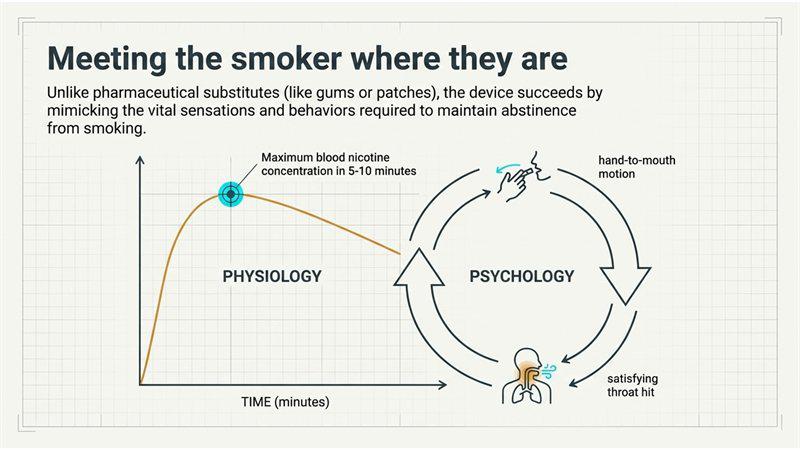
Speed: It achieves maximum nicotine concentration in the blood in approximately 5-10 minutes, offering immediate satisfaction.
Sensation-Behavior: It simulates the “hand-to-mouth” motion and the “throat hit,” elements that are crucial for maintaining abstinence from smoking, unlike pharmaceutical substitutes (gums, patches).
5. The Verdict: Harm Reduction#
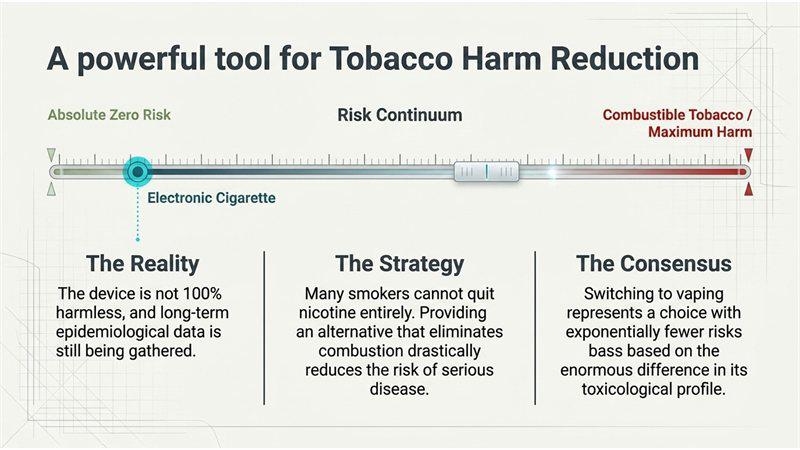
Although the electronic cigarette is not 100% harmless, the enormous difference in its toxicological profile makes it one of the most powerful tools for Tobacco Harm Reduction.
This strategy recognizes that many smokers find it difficult to quit nicotine entirely. By providing them with an alternative that eliminates combustion, the risk of serious diseases is drastically reduced. The main scientific limitation remains the need for long-term epidemiological data; however, the current scientific consensus is that switching to vaping represents a choice with exponentially fewer risks.